


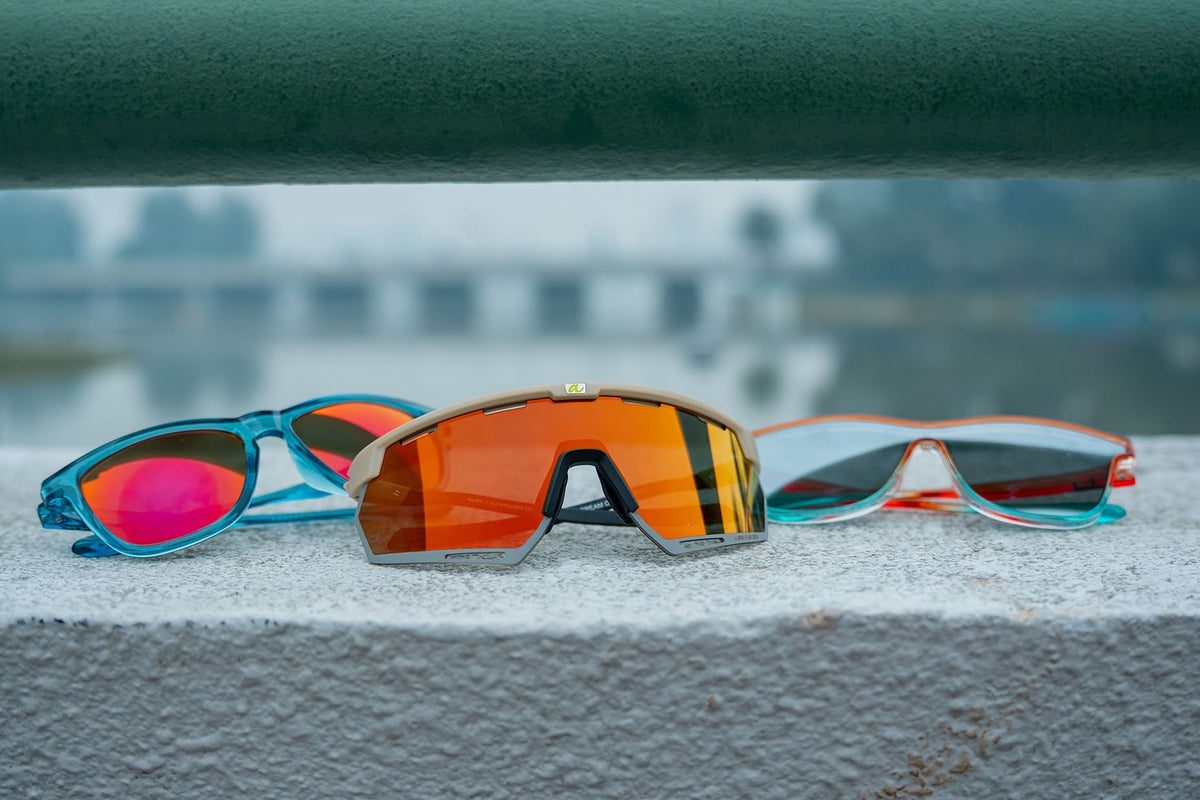
Polarised sunglasses are worth it in Singapore if you run, cycle, drive, or spend time near water or wet roads. The polarised filter cuts the harsh glare that bounces off flat, shiny surfaces, so you squint less and see more detail. They are not worth paying extra for if you mostly wear sunglasses for short walks between air-conditioned buildings. One thing to know up front: polarisation is not the same as UV protection. UV safety comes from a UV400 rating, which any decent pair should have, polarised or not.
In this article
- What do polarised sunglasses actually do?
- Polarised vs non-polarised: how do they compare?
- When are polarised sunglasses worth it in Singapore?
- When can you skip polarised?
- Which pair should you choose?
- FAQ
What do polarised sunglasses actually do?
Light that bounces off a flat surface, like a wet road, a pool, or a car bonnet, becomes concentrated in one direction. That is what you experience as glare. A polarised lens has a built-in filter that blocks this concentrated light and lets the rest through. The result is less squinting, better contrast, and colours that look cleaner.
It does not make the world darker in the same way a darker tint does. A dark non-polarised lens dims everything. A polarised lens targets the glare specifically. The American Academy of Ophthalmology has a plain-English explanation of how polarised lenses work, including the fact that they reduce glare but are not a substitute for UV protection.

Polarised vs non-polarised: how do they compare?
Short answer: polarised wins on glare, non-polarised wins on price and on screen visibility. Here is the side-by-side.
| Feature | Polarised | Non-polarised |
|---|---|---|
| Glare from water and wet roads | Strongly reduced | Only dimmed |
| UV protection | Depends on the UV400 rating | Depends on the UV400 rating |
| Phone and car screens | Can look dim or patchy at some angles | Clear |
| Best for | Running, cycling, driving, beach, water | Everyday wear, court sports, short outings |
| Typical cost | Higher | Lower |
When are polarised sunglasses worth it in Singapore?
Three situations come up most for people here.
Running and cycling on the road or park connectors. Tarmac, wet pavement, and the sheen from puddles after an afternoon shower throw a lot of glare. Polarised lenses take the edge off, so you see the road surface and obstacles sooner.
Driving. Glare from the car in front and from wet roads is tiring over a long drive. Check that you can still read your dashboard and map screen comfortably at the angles you sit.
Beach, boat, and pool days. Water is the classic glare source. If you spend weekends at East Coast, Sentosa, or on a kayak, polarised is the clear pick.

Carbon fibre frame and polarised high contrast lenses, light enough to forget you are wearing them.
When can you skip polarised?
Polarised is not a must for everyone. Skip it, or at least think twice, in these cases.
- You check screens a lot. Some phone, GPS watch, and car displays look dim or striped through polarised lenses.
- You play court or racquet sports. Pickleball and tennis players often prefer non-polarised lenses so the ball and the court lines look natural.
- You want the cheapest pair. A well-made non-polarised pair with UV400 protects your eyes just as well.


Non-polarised carbon fibre, a better fit for pickleball and anything where you need to see screens clearly.
Which pair should you choose?
Match the lens to what you do most, not to the label.
- Daily wear and weekend beach days: start with the polarised sunglasses collection. Pretty in Motion is the easiest entry point.
- Running, cycling, hiking: go for a lighter carbon fibre frame with polarised high contrast lenses, like the TORQ range.
- Court sports and screen-heavy days: a non-polarised pair is the smarter buy.
Whichever you pick, look for a UV400 rating or 100% UV protection on the product page. The American Academy of Ophthalmology's sunglasses guide lists UV protection as the first thing to check, ahead of tint or price.

Polarised lenses at our lowest price point, good for daily wear and beach days.

Carbon fibre and polarised high contrast lenses for long days on trails and park connectors.
Frequently asked questions
Are polarised sunglasses better than non-polarised?
They are better at cutting glare from water, wet roads, and shiny surfaces. They are not better at blocking UV. For UV protection, check the UV400 rating on either type.
Do polarised sunglasses protect more from UV?
No. Polarisation filters glare, while UV protection comes from the lens material or coating. A polarised lens without UV400 can still leave your eyes exposed.
How can I tell if my sunglasses are polarised?
Look at a phone or laptop screen through the lenses and rotate your head or the glasses. If the screen goes dark or patchy at some angles, the lenses are polarised.
Are polarised sunglasses good for driving?
Many drivers like them because they reduce glare from wet roads and other cars. Check that you can still read your dashboard and any in-car screen comfortably.
Are polarised sunglasses good for pickleball?
Many players prefer non-polarised lenses on court so the ball and court lines look natural. It comes down to personal preference and the lighting where you play.
Find your polarised pair
Designed in Singapore, built light, made for the way you actually move.
Shop polarised sunglasses →
Share:
4 Best Women's Sunglasses in Singapore for Race Day, Beach Days and Everything Between (2026)